Welcome to my weekly Author Spotlight. I’ve asked a bunch of my author friends to answer a set of interview questions, and to share their latest work.
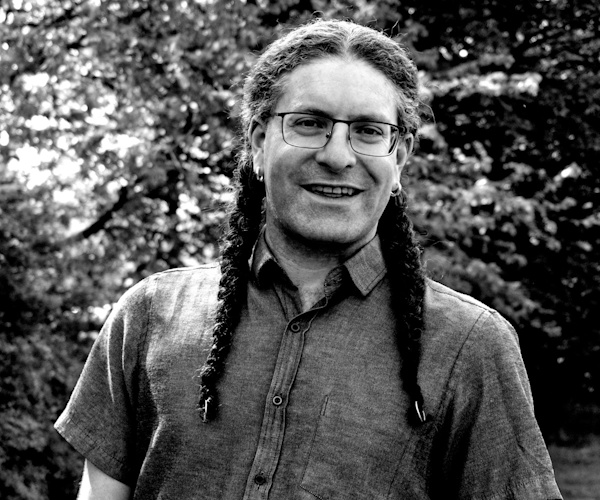
Today: Or M. Bialik has spent the last decade and change crisscrossing the planet, trying to understand the effects and impacts of modern and ancient climate change. A PhD in Earth and Environmental Sciences, they have seen a thing or two that exceeds the scope of understanding by just looking at it.
Thanks so much, Or, for joining me!
J. Scott Coatsworth: What’s the weirdest thing you’ve ever done in the name of research?
Or M. Bialik: Given that research is literally my day job, that’s a very wide and loaded question. I read a lot, and I do mean A LOT of academic literature. Only about half of it for work; the rest is because I am obsessively curious about things. My social media accounts are full of small comments and synopses of academic papers I’m no longer allowed to bother my friends with. Some of it goes into my writing; some just stays in the back of my mind and informs things. Although that isn’t that ‘weird’, is it? I spent months upon months at sea for work, which has been effectively excellent research to life on a spaceship. I scuba dive, which taught me a lot about how breathing equipment works. But I think the weirdest was going out with a bunch of sticks and play act some of the fight scenes. I probably looked like a weirdo to anyone looking at me, but I really wanted to figure out how certain movements would feel. What muscles would be engaged? Which opening will form? How would any of that affect balance? What follow-up movement would be more natural? Some things are just more realistic if you can experience them.
JSC: What does success mean to you?
OMB: Anyone reading what I write. Honestly, that’s it, just knowing that people read this stuff feels like success. More than sales or anything, seeing people engaged with my work is what would be the indication I got it right. I would love to see any fan art or fanfic based on my work. That would tell me, more than anything, that it clicked with people. When they would like more and would put their time and effort into that. Not being passive consumers but engaged creators.
JSC: Tell us something we don’t know about your heroes. What makes them tick?
OMB: The main character, Ismat Dextral, is a bit of a hot mess. From their gender to how they constantly feel like they don’t belong. They are really lonely, but the thing is, they don’t want to admit it, even to themselves. The worst part about it is that it’s somewhat self-inflicted. In their job, they’re active; they initiate; they feel they know their place, so they bury themselves in it because personal life is hard and complicated. But the thing is, they really don’t want it to be like that; they do want more. They share the same fantasy many introverts have: they want someone else to step into their lives, make them deal with the hard parts, and catch them when they eventually fail. More then the whole conspiracy in the background they have to deal with, the real story starts when someone like that steps into their lives.
JSC: What’s your core motivation in Because My Mom Said So?
OMB: I wanted to write a reluctant coming-out-of-the-closet story with a good ending. But more than that, I wanted to have things stacked to make it harder. That the sociality they live in would make it difficult, that their own life experience would make them hesitant, and that they would have to overcome trying before and failing. So that informed a bit about the settings, and also the side characters, as I knew I’d need to have someone there to help them through. The conspiracy plot gave me all the opportunities to both push them through the process and force them to deal with a bunch of conservatives who would not approve. It all just worked together.
JSC: If you had to write an entire story without either action or without dialogue, which would you choose and how would it go?
OMB: Probably without action; I love conversations. I think that’s where the most interesting parts of the story happen. Some of the comics I enjoy the most are just the characters sitting and talking to a therapist, or flirting, or negotiating. Entire issue, no action, just dialogue with words and body language.
JSC: What is a weird, hyper-specific detail you know about one of your characters that is completely irrelevant to the story?
OMB: The tour routes of their mom’s band. It really doesn’t change anything to the story. But it has some bearing on whom they might have met along the way and how it affected the way the main character grew up. It also has some effect on one specific scene which sets up the interactions of two characters. So I felt like I needed to build a mental image of at least one of those tours. Where they went, how were the shows, etc. It’s not super detailed, but it has more information than it really needs for something that really doesn’t show up in the story.
JSC: Were you a voracious reader as a child?
OMB: Once I started reading, I was an obsessive reader. I read anything I could put my hands on. I read encyclopedias; I read dictionaries; I read reference books, and I read fiction. Sometimes several books a week. At some point, I sat in English class and just read a novel in front of the teacher. She was surprisingly cool with that.
Thing is, that “started reading” part, that was a bit tricky. I have learning disabilities, which were diagnosed only in my teens. Which meant that I was rather behind on the whole reading thing relative to everyone else. Took people years to pick up on that; I was very good at masking. I could read off answers to homework I couldn’t do from an empty notebook. But eventually I caught up. The book that pushed me from “not reading” to “won’t stop reading” was The Dragon’s Crown by Uri Orlev. The moment I realized those types of books exist, I became a regular at our local library.
JSC: Do you have any strange writing habits or superstitions?
OMB: I usually write only after dark. Part of it is just a life thing. I work long hours, then have to deal with life stuff, so I only get to sit down and write in the evenings. But also when I get a whole day to myself (which is remarkably rare), I’ll probably procrastinate until dark before I actually sit down and do some writing. A bit easier with editing, but the part of me that writes fiction usually only comes out at night. Then again, the part of me that writes non-fiction usually takes up most of my mental bandwidth during the day.
JSC: How does the world end?
OMB: Are you really asking me about my day job (climate change researcher) now? Because the answer is a bit of a downer. Right now, the world, as in Earth as a habitable space for humans, ends possibly within the lifetime of our grandchildren. The worst-case scenarios, we think, policies mostly allowed us to dodge… at least as long as they continue. But we’re still headed to a bad place. Maybe not as bad as David Wallace-Wells sets it up in “The Uninhabitable Earth”, but it’s far from good. The stress climate change is going to put on ecosystems and human society may very well break both. Not all of them, but enough of them to make the world unrecognizable to any of us who would visit that future.
JSC: What are you working on now, and what’s coming out next? Tell us about it!
OMB: My next book is called THE PRINCESS WHO HITCHHIKED. It’s a space opera, somewhat influenced by Lois McMaster Bujold and Becky Chambers. It’s about a royal bodyguard who is pulled out of her regular detail to escort someone who sets off all her alarm bells to the other side of the galaxy. Because of the nature of that person, they can’t take any official craft and essentially have to catch rides with various haulers from different cultures and backgrounds. All of that, while being chased and the bodyguard finding herself having to overcome aspects of her abusive upbringing. A polished draft is done, and I’m currently shopping it around to people to help me write up queries for agents.
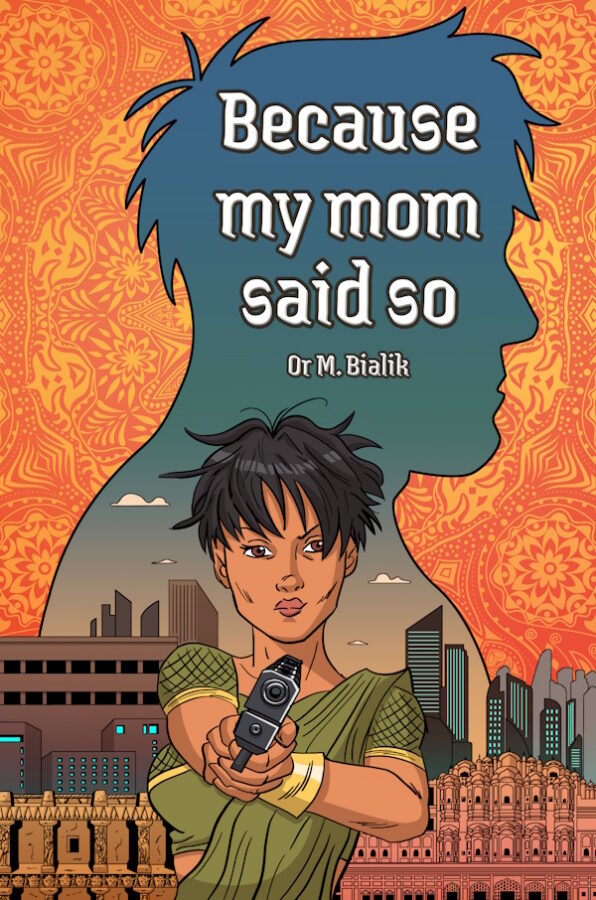
And now for Or’s new book: Because My Mom Said So:
Ismat’s dating life is terrible, and a lot of it has to do with honesty. Not that he doesn’t want to be honest; he just can’t – or it will ruin his life. He can’t tell anyone he works for the Dominion Security Bureau counter-terrorism division; he can’t tell his date who his father is, even if he knows them, and he most definitely can’t tell them how he actually feels about the gender he has to wear.
A possible security breach in the Bureau means that he and his immediate boss are the only people who can be trusted with a case. Things rapidly become more complicated as the Bureau’s Director pulls two foreign agents into the mix. More complicated than others because Ismat finds one of them very attractive, something which he would rather the agent not know. Unfortunately – she’s telepathic.
When the investigation leads them to a women-only charity event, Ismat finds some use for the dresses kept in the back of the closet and finds out that having a partner who knows what you think is not such a bad thing.
Amazon | itch.io | Universal Buy Link
Excerpt
“May I help you?” The woman asked me.
“No ma’am,” I said. “I just like your brooch.”
She stuck her nose up. “Makes sense someone like you will focus on the shiny thing.” Squama pulled Pushpa away towards the VIP area, and the woman went with them.
“Who was that steaming pile?” Asu Medeni asked once they were away.
Gayatri snorted. “Don’t let her hear you say that,” she said. “They still haven’t paid us.”
“That’s Masuma Kadamitas,” Mom said. “She actually owns the club. Keep away from her.” Asu Medeni and I exchanged looks, that might be our target. Mom looked at us, her face severe. “I don’t know what you two are thinking, but I can tell you it’ll end badly,” she said and went over to her drums to set up.
Asu Medeni came close to me. “She’s going to tell us ‘I told you so’,” I said.
“Have you spotted a better target?” She asked. “I haven’t.”
“Is she shielded?” I asked.
“Poorly,” Asu Medeni said. “I can get around it.”
“Without triggering any trip wires this time?” I asked.
“Ah…” She made a face and looked a bit to the side.
“Seriously!” I did my best to shout without raising my voice.
“I told you,” she said. “I am not very precise.”
“What are the odds they have scanners about the place?” I asked
“Those things are useless,” she said. “It just reads high EM emissions from enhanced neurological activity; every other person with power emits them.”
I took a look at the crowd beyond the stage. Many of them were already starting to get drunk. The lights were getting somewhat dimmed, and some background music was pounding through the speakers. It was mostly beats to get people in the mood, nothing really with form. I turned back to Asu Medeni. “And how many of the people there you think have powers?” I asked. “This isn’t the Capital, if any of these chaff had any powers, they wouldn’t be here.”
“There are at least four low-power telepaths over there,” she said.
“One of them is sure he’s crazy and has been taking drugs to make the voices stop.” She looked at me. “They have powers, they’ve just been told they don’t because they aren’t the right people to have them.” She smiled suddenly, it was an unkind and wicked smile. “I have an idea.”
“Would I like this idea?” I asked, alarmed.
“No,” she said. “Which is why I’m not going to tell you what my idea is.” She kissed my cheek, right next to my ear. “Be ready to run when this blows up.” She walked off to the other side of the stage. Harish played a chord, drowning the background, which then stopped. The light turned off as the spotlights turned on.
“Good evening, everybody!” Pushpa’s voice echoed through the club. “We’re The Fifth Note, and you’ve got some listening to do!”
The drums kicked in, followed by the instruments, and then Pushpa started singing. They were good, not amazing, but good. I preferred some of the other groups that Mom played with. But they had guts.
She was singing about being oppressed, ignored, and discarded, about a system that would not take her and rejected her for who she is. I could see this crowd connecting to that. But if you know the keywords, you would realize that she was not singing about being a lower-class drag who cannot move in life because of external forces; she was singing about being a woman who would not fit societal expectations and is paying an unfair price for it. I have no idea how this crowd would react if they would actually understand what they were bobbing their heads to.
The second song was in some regards even more overt, about a woman who does not want the person pining for her and not seeing them as a possible partner. There was a line about her not accepting her suitor for who they are that struck a bit too close to home for me. The crowd was entranced at this point, I am not sure that they really processed the lyrics they were shouting back at the stage. The second song winded down, and I could hear the drums shifting a bit, working into a slower pace than the first two high-energy ones. The keytar came back in a melodic tone when, all of a sudden, the lights turned on. Kadamitas erupted up from the VIP lounge, her hand covering her right eye with two suited muscles behind her. One of them was holding something in their hand and pointed down towards the crowd.
“That’s a fucking alien telepath spy!” Kadamitas yelled, leaning over the rail. “Whoever kills him is drinking on the house for the rest of their lives!” The crowd, in an instant, erupted into a brawl. No one seemed to know exactly who they were trying to get, but they had some general idea of where they were. That was apparently enough to start smashing skulls on the way there.