Welcome to my weekly Author Spotlight. I’ve asked a bunch of my author friends to answer a set of interview questions, and to share their latest work.
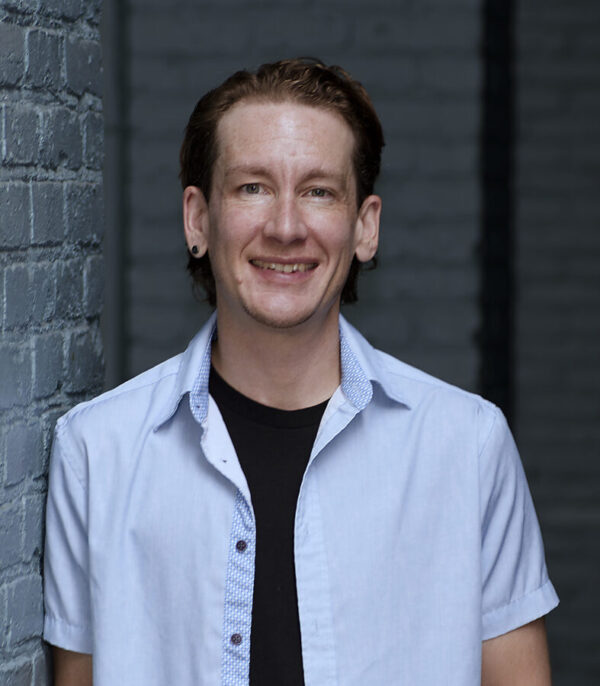
Today: JAYE C. WATTS (he/they) is a queer and trans sci-fi author writing LGBTQ+ science fiction, living on Lək̓ʷəŋən territory in Victoria, BC, Canada. He holds a bachelor’s degree in Sociology, with a minor in Technology and Society, as well as a diploma in Professional Recording Arts from the Art Institute of Vancouver.
When he isn’t writing, Jaye can be found falling down rabbit holes of all kinds thanks to an unquenchable curiosity and lust for learning – homeschooling will do that to you. Jaye also loves classic jazz, mixing cocktails, biking all over the city, and of course, people watching.
Thanks so much, Jaye, for joining me!
J.Scott Coatsworth: If you could sit down with one other writer, living or dead, who would you choose, and what would you ask them?
Jaye C. Watts: It would have to be George Orwell. 1984 hugely inspired the worldbuilding in The New Worlds. Orwell’s ability to immerse readers in the mind of someone living under a totalitarian state was as chilling as it was believable. I would ask him not only what similarities he sees in our current reality and the time period during which he wrote 1984, but also the differences he observes—and how those might help or hinder us in our efforts to ward off authoritarianism in the 21st century.
JSC: Have you ever taken a trip to research a story? Tell me about it.
JCW: The United Nations plays a major role in The New Worlds, and its headquarters are located in New York City. Because of this, the Earth portion of my story takes place in the Big Apple. To make the setting feel authentic, I learned as much as I could about NYC—even using Google Streetview to explore the same streets my characters walked!
A few years in to working on my book, I’d fallen so in love with the city I just had to see it for myself. So for my 40th birthday, I booked a flight. Not only was the trip incredible, but it also made my story feel that much more real to me—and hopefully to my readers as well!
JSC: Do you reward yourself for writing, or punish yourself for failing to do so? How?
JCW: I try to set specific goals for myself each time I sit down to write, and if I achieve them, I reward myself with a fancy cocktail. You can often find pretty pictures of them (along with the recipes!) on my Instagram account (instagram.com/jayecwatts).
At present, I only write on the weekend due to my Monday-Friday day job. If I ever start writing full-time, I may have to rethink my reward system…
JSC: Are there underrepresented groups or ideas featured in The New Worlds? If so, discuss them.
JCWL My characters span the entire LGBTQ acronym. Axton, my main character, is pansexual and her love interest is lesbian. I have a secondary character who’s nonbinary, a minor character who’s bi, and one who’s gay.
Having a diverse cast was really important to me when I began writing The New Worlds, but something you won’t find in the book are any of the terms I just listed. That’s because the story is set in the future, where queer and trans rights have advanced to the point that these communities feel far less need to define or defend themselves. I know, I know—I’m a dystopian writer, but I can’t resist throwing in a dash of utopia now and then 😉
JSC: Are you a plotter or a pantser?
JCW: I have a system that combines both. First, I like to lay out a rough plot—how the story begins, the inciting incident, a few twists and turns, and how it ends. But when I start writing, I let my characters to meander and explore between the main story points.
On one hand, plotting in advance allows me to execute writing devices that impress readers—things like clever foreshadowing, well-thought-out twists, and interwoven subplots from start to finish. On the other hand, “pantsing” between those plot points gives characters room to surprise me (which is so fun!) and to feel agentic and alive to the reader.
JSC: What does success mean to you?
JCW: Success means accomplishing something you didn’t think was possible—and doing it for the right reasons. For me, those reasons must always be rooted in deep, personal values.
Many people achieve incredible things but compromise parts of themselves to do so. When that happens, you risk becoming unrecognizable to yourself. Even if I were to achieve great success, the last thing I would want is to become a stranger to myself.
JSC: How did you choose the topic for this book?
JCW: The idea for The New Worlds came to me in a three-word flash while I was meditating one morning: “physical filter bubbles.” At the time, I was deeply concerned about our siloed realities on social media, and the filter bubbles that keep us alienated and polarized. I wondered what would happen if our digital filter bubbles became so extreme that society fractured into separate physical worlds. So I paused my meditation timer and wrote down the idea.
And I’ve been writing ever since.
JSC: What were your goals and intentions in this book, and how well do you feel you achieved them?
JCW: I had three main goals with The New Worlds. The first was to understand our current state of affairs. Unfortunately, it’s difficult to run controlled experiments on human societies, so instead I learn as much as I can about psychology and sociology, set up a world with backstories, then tip the first domino and watch what unfolds.
My second goal was to have fun! Writing stories is a blast, and creating an entire universe in my head was the most entertaining thing my busy brain could come up with.
My third goal was to connect people. Even though it’s dystopian sci-fi, The New Worlds is heartfelt at its core. The story asks what we all have in common and explores how the answers to that question might bring us closer together.
JSC: What are some day jobs that you have held? If any of them impacted your writing, share an example.
JCW: For many years I’ve worked in music—writing and performing, teaching, recording in the studio, and running live sound. Since starting The New Worlds, I’ve realized how much overlap there is between writing stories and writing music. Both have intros and outros, themes and motifs, peaks and valleys, feeling and emotion. The same goes for post-production: editing a story resembles mixing a track, while proofreading feels like the mastering stage.
I also notice it in my prose. My experience crafting catchy lyrics with smooth phrasing has given me an ear for dialogue and narrative that not only convey vivid imagery and emotion but also sound pleasing when read aloud. Here’s hoping for an audiobook version of The New Worlds one day!
JSC: What are you working on now, and what’s coming out next? Tell us about it!
JCW: Before releasing The New Worlds, I made sure the second book in the trilogy was already drafted. Now that Book 1 is out, I’m back to work on finishing Book 2: The Old World. It’s like the first book—but with more! It’s longer, with more time travel, more worlds, more characters, another love story, more twists, and even higher stakes.
I’m currently in editing mode and hope to have it ready for release in late 2026. Please get in touch if you’d like an ARC of the first and/or second book I’d love your feedback.
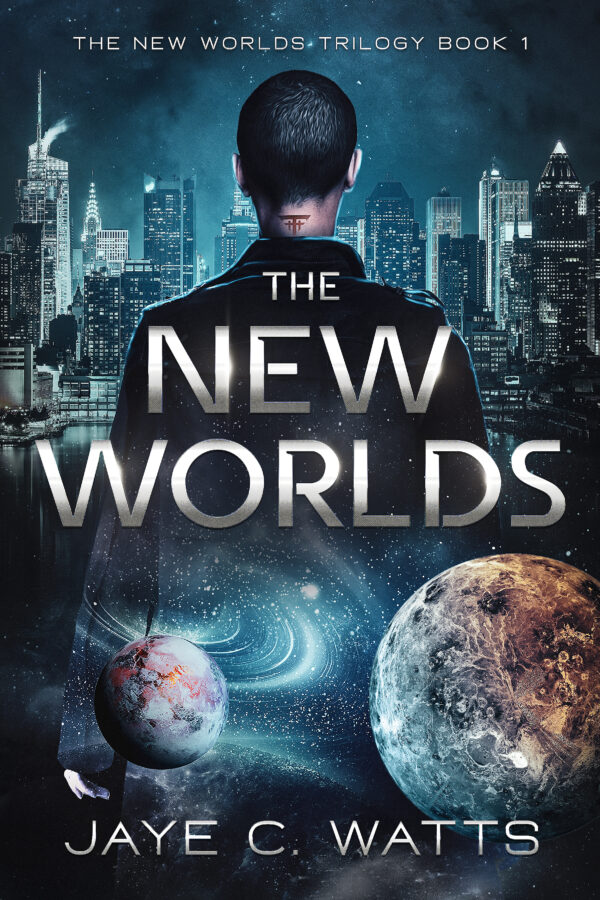
And now for Jaye’s new book: The New Worlds:
When you’re torn between love and duty, even broken shards can kill.
The year is 2293, and the Truth no longer exists. In this future, there are many truths, giving rise to many worlds—but each must be kept separate.
Born to protect these truths, Axton Bryce patrols the New Worlds Star System—to observe, participate, and report. But as she learns the rules of each world, she must also hunt those who defy them: the Outliers.
While stationed on a nearby planet, Axton meets the charming Ambassador Bray Wilde, sparking a connection that stirs memories of a love she thought lost forever.
When the ambassador proposes a daring rescue mission, Axton faces a second shot at first love—and an impossible choice between lifelong allegiance . . . and the chance to claim a truth of her own.
A blend of Black Mirror and 1984—but with hope—this gripping, heartfelt dystopia will captivate fans of Ancillary Justice and Becky Chambers’ Wayfarers series.
Universal Buy Link
Excerpt
I walked across the beach, savoring the solitude. The potent smell of Harber trees mixing with the ocean’s scent calmed my body and brought clarity to my mind. Aside from the wind, waves and some chirping that echoed in the distance, all was quiet. Seconds later, a voice joined my thoughts.
“Axton?”
I turned to Ambassador Bray walking barefoot across the sand.
“Thought you’d be sick of me by now,” I said.
“And I thought you’d be sleeping by now, considering how darn early you get up.”
The two of us smiled at one another, after which I held their gaze, finally accustomed to such deliberate eye contact.
Ambassador Bray arrived next to me and leaned their head all the way back, getting a good look at the sky. “I come out here almost every night,” they said.
I leaned my head back, too. “Not a bad view,” I said, observing the night sky. “I try to find a dark and quiet place to stargaze on all my assignments.” I took in a big breath of evening air. “The stars feel like home to me, even though my view of them is forever changing.”
Ambassador Bray sighed in response. “My sky has always looked the same.”
I glanced over at the wistful look in their eyes.
“You wanna hear a story?” they asked.
“Sure.”
“See that island?” They pointed straight ahead.
I squinted, then nodded. Thick groves of Harber trees covered the lonely patch of land, surrounded by an expanse of dark waters.
“When I was a kid, I yearned to explore it,” they said. “I would sit on this beach for hours, dreaming about the things I would discover, if only I could reach it.”
I smiled at the thought of a child-sized version of the ambassador. It wasn’t at all difficult to imagine.
“So one day,” they said, puffing up their chest, “I finally decided I would swim to it.”
My eyes widened. “Truth,” I said. “That’s quite the swim for a little kid.”
“It was.” They displayed a proud smile. “Kip, one of my progenitors, still swears I was born with gills.” The ambassador let out a small chuckle before crossing their arms. “I spent the entire day exploring. Barely made it back in time for last meal.” With a laugh, they added, “When I finally reached the shore, my caregivers had much to say about it.”
We both stood quietly, staring out at the deserted island, listening to the sound of the waves crashing against the shore…
“I have,” I blurted.
Ambassador Bray looked at me, tilting their head. “Been in love,” I added, finally answering their question from yesterday. “Once. When I was younger.”
The ambassador furrowed their brow, as if they already knew my story did not have a happy ending. “What happened?”
My gaze remained fixed on the island, the tears in my eyes turning each tree into a dark blotch. “She’s gone,” I whispered. “I lost her… five years—” I rushed a hand to my mouth. “I can’t believe it’s been five years.”
Ambassador Bray took a step closer, gently sliding an arm around my shoulders.
“It was my fault,” I said, sniffing, then wiping my nose with a sleeve.
Bray pulled me in nice and close, allowing my body to rest against theirs. “Well,” they whispered, “lucky for you, all things can be mended.”
I leaned in, feeling myself let go. Feeling… unclenched, for the first time in years.
We stood for a while, watching the waves and saying nothing.
When my eyes had finally dried, Ambassador Bray left my side. They walked toward the shore, dipping a foot into the water. Then they spun around and kicked a small splash in my direction. “What do you say I take you on a little tour of my private island? They teach you how to swim in Mediator training?”
I laughed at them. “Yeah, right,” I said.
But there was no response. All they did was stand there, an expectant grin plastered across their face.
“No way,” I said. “There is no way I’m getting in that water. Both suns have set. It’s much too dark to be—”
“Aww, come on.” They kicked another splash my way, a little bigger this time.
I took a big breath, letting out a long and thoughtful exhale.
“Pleeeease?”
Crossing my arms, I raised an eyebrow.
“The water’s really not that cold. I promise!”
Then, for a reason unbeknownst to me, I threw off my coat, removed my boots and my socks. With a determined stride, I marched toward them, rolling up the sleeves of my uniform. This is fine, I thought to myself. I was only doing my job, thinking and feeling the ways of this world. Exactly what I was supposed to be doing.
Wasting no time, Bray giggled with glee before diving in.
I cursed as the water hit my shins. “Liar! It’s fucking freezing!” But they couldn’t hear me.
After blowing through puckered lips once, then twice, I swallowed a gulp of air and dove in after them. A leisurely breaststroke had me gliding in the wake of Bray’s fervent flutter kick. Stomach-churning nerves tickled my insides as I made my way through the cool, dark waters. Before long, I was fighting to keep up, now believing Bray’s progenitor about the gills.
“C’mon, AB!” they shouted back.
We swam hard for a good ten minutes or so, maintaining a swift pace.
After plowing my way through wave after wave, my toes finally felt the squish of land again. As I strode against the remaining sea, I watched Bray emerge from the water, their white dress now clinging to every inch of their body. I trudged my way onto shore, finally catching up.
With dry sand coating my wet feet, I smiled at them, relieved to be on land again. I sheepishly watched as they peeled off their top garment and wrung it out. Despite the heat scorching my cheeks, I did the same.
Once I’d reassembled myself, Bray held out their hand.
With the enthusiasm of an eight-year-old, they pulled me along, showing me the new world they’d discovered back when they were a kid. At one point on the tour, I stopped to look up, remembering what they had said earlier —that their sky had always looked the same. I was beginning to understand why Bray asked as many questions as they did.
I followed my tour guide as we wandered the island. All part of the job, I thought—swimming with Bray, holding their gaze, taking their hand as we strolled the sandy beach, experiencing a form of love that was commonplace on a world such as this.
All part of the assignment, I told myself.
As we swam back to shore under the bright light of the moons, I realized—maybe it was more.